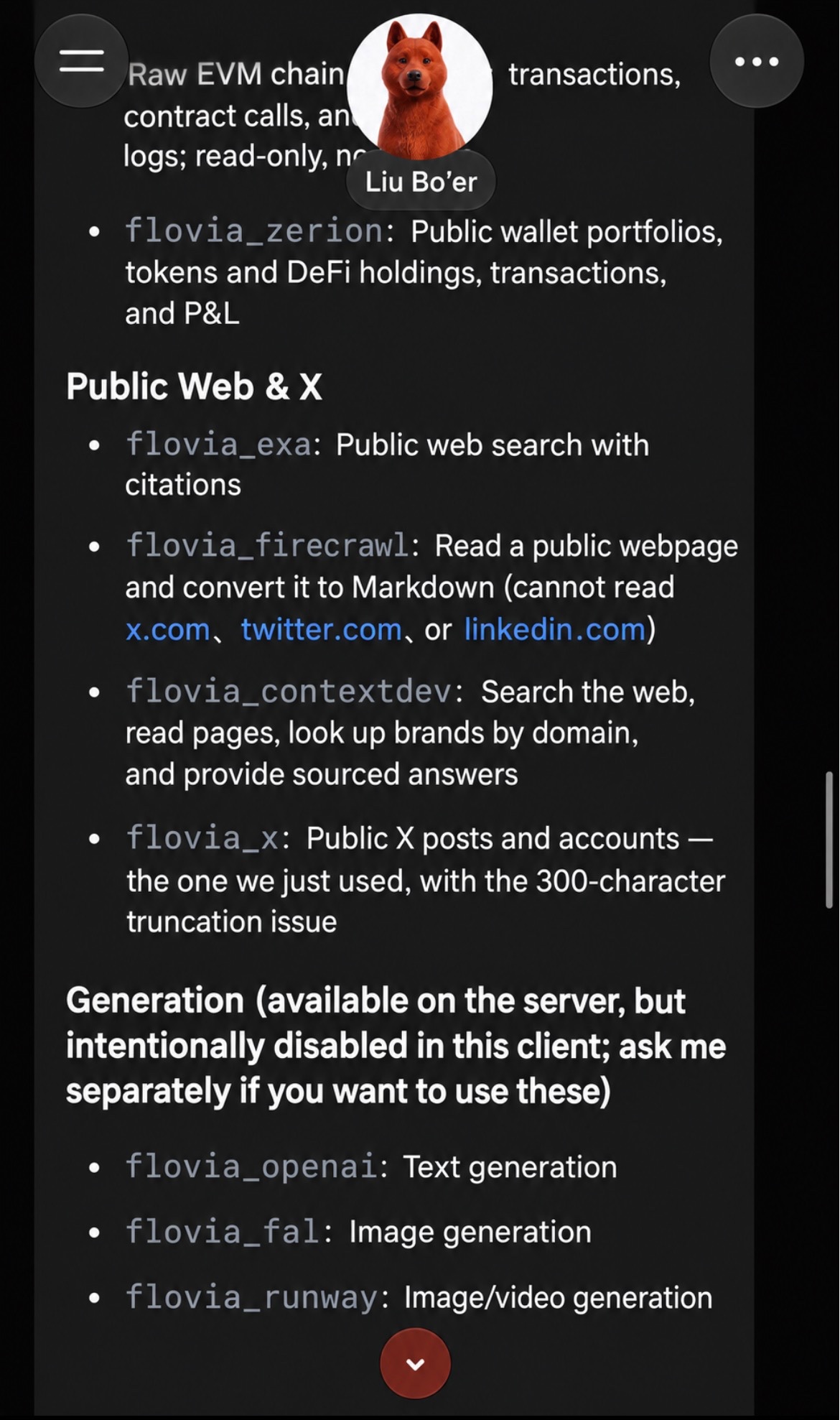
Flovia's free API pool is surprisingly deep.
The free tier gives you a 5-hour window and a weekly call cap for now, with a paid tier coming later.
The ones I'd actually use: Exa, Firecrawl, X, and OpenAI's gpt-6-luna.
More posts
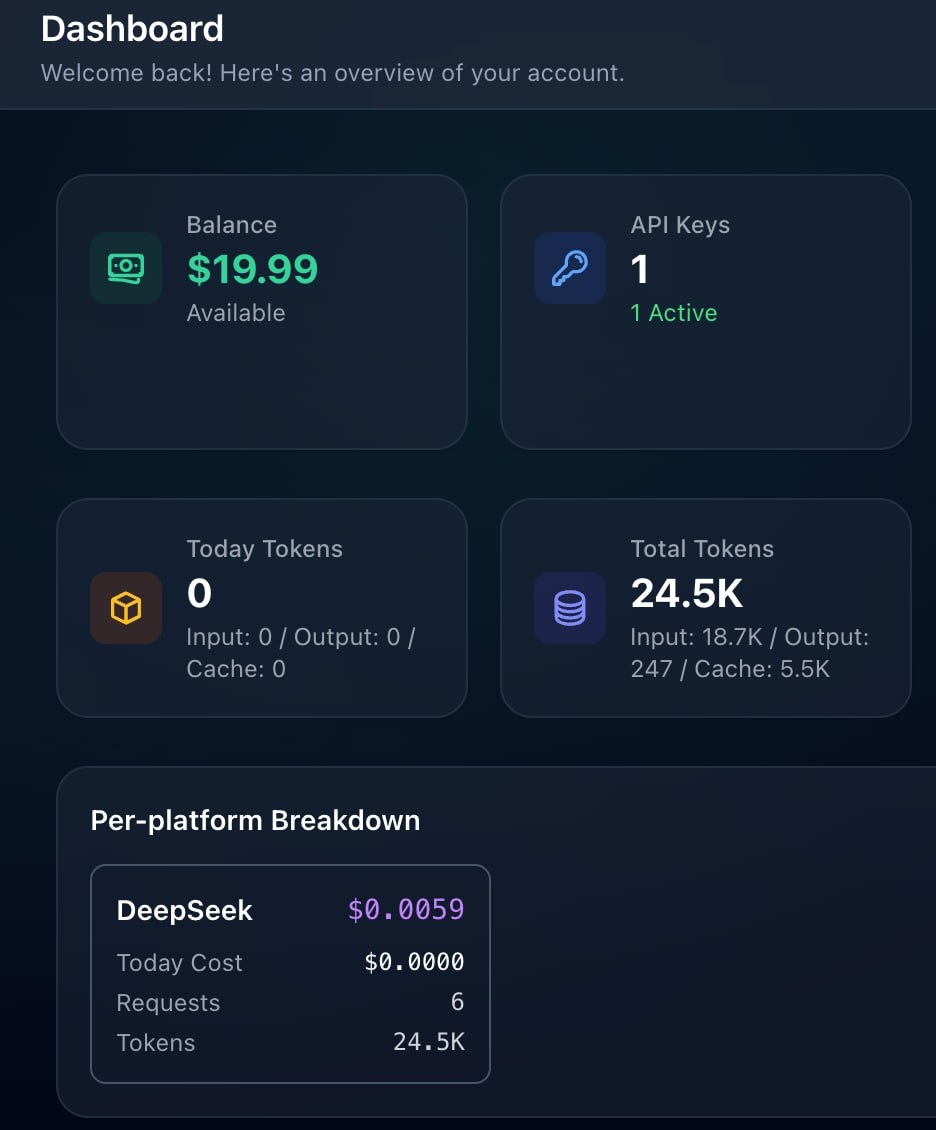
I used to run the main model only on the official API. Lately I've moved to a relay and honestly it's kind of great: top up at ¥1 for $1 of credit, and ds-v4.1-flash is just 0.15x the price. On top of that, workbuddy, qoder, opencode, codex and the like all throw in free quotas plus some cheap low-tier models. I route those to subagents and the load gets spread across roughly 400M tokens.
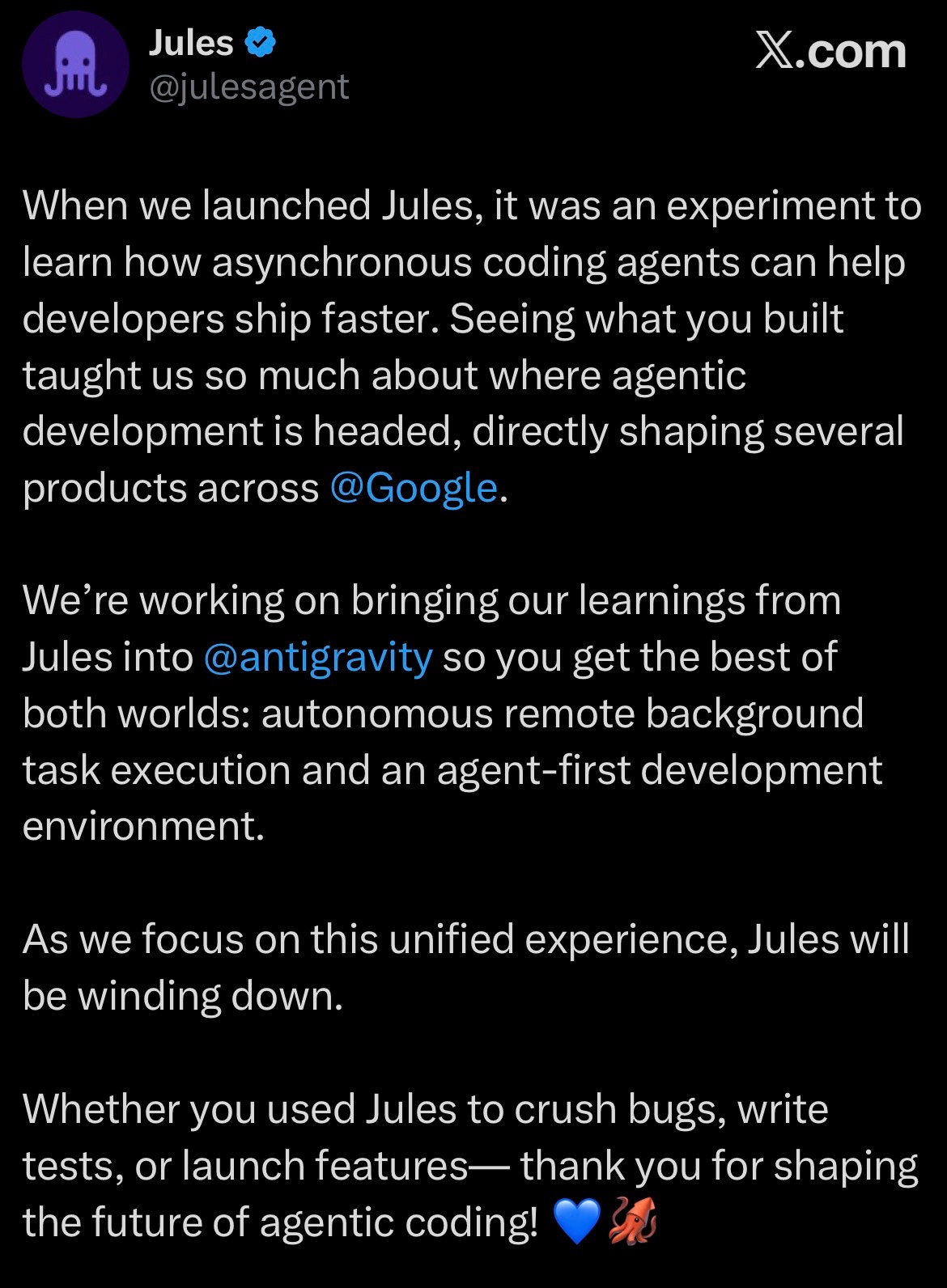
Jules was an async autonomous coding agent. You'd give it a task, it'd clone your GitHub repo to a cloud VM, use Gemini to plan the changes and write the code, run the tests, then open a PR for you to review. You could just close the laptop and go do something else, then come back to a PR ready to merge. It worked a lot like how I work now, and it was one of my favorite things Google ever shipped. The real problem was Gemini, which just wasn't good enough. People left.
Won't refund the subscription either. I'm half convinced the appeal email is itself phishing, because I'm pretty sure they log the IP. DHH came to Shenzhen recently and showed how he uses Claude Code over there. That's the safest way now, honestly: run Claude Code on an overseas machine, connect through Tailscale, never use it locally. So I need to rent an overseas box with a residential IP, and register and log into Claude there.
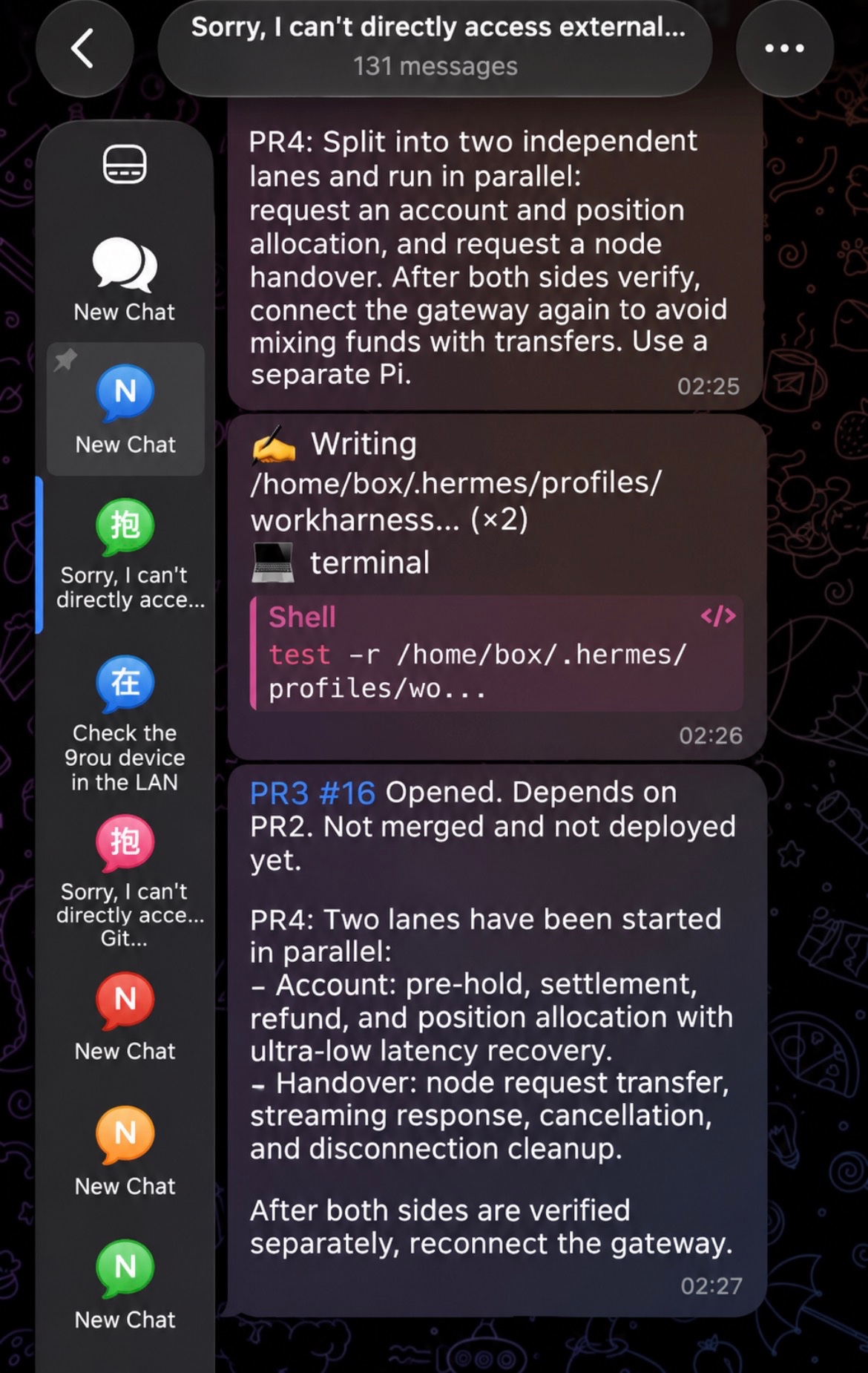
Until late September it was the usual setup: parked in front of my laptop, terminal open, bossing pi around, fanning out subagents, then eyeballing diffs myself and filing the PR. Glued to the chair all day, every day. Late September I moved the whole thing to my phone, Hermes runs the show, pi takes the orders. My back is very grateful. Three weeks in, still no regrets. Stack: Hermes on flagship brains (gpt-6-astra / opus-5.5), pi on mid-tier (ds-v4.1-flash / sonnet / terra) with as few plugins as possible, the two talking over a2a. Hermes reads the issues, slices them into small tasks, spins up a worktree for each one, and dispatches a pi into it. When a pi finishes it pings Hermes, who decides: ship the PR or bounce it back for rework. I get back from a full day of being a tourist, or just wake up, and a dozen PRs are sitting there done. Pretty sweet. The catch is how black-box the whole thing is. My emotional arc has been a rerun of early vibe coding, except back then I at least read the diffs. Now even that goes to a flagship model. Boxes all the way down. If you don't have data anxiety, grok-bot and chatgpt-dot basically ship this out of the box, grok-cli and codex built in, native agent-to-agent comms. Downside: your code lives on their servers, everything's moderated, and one ban takes it all with it.