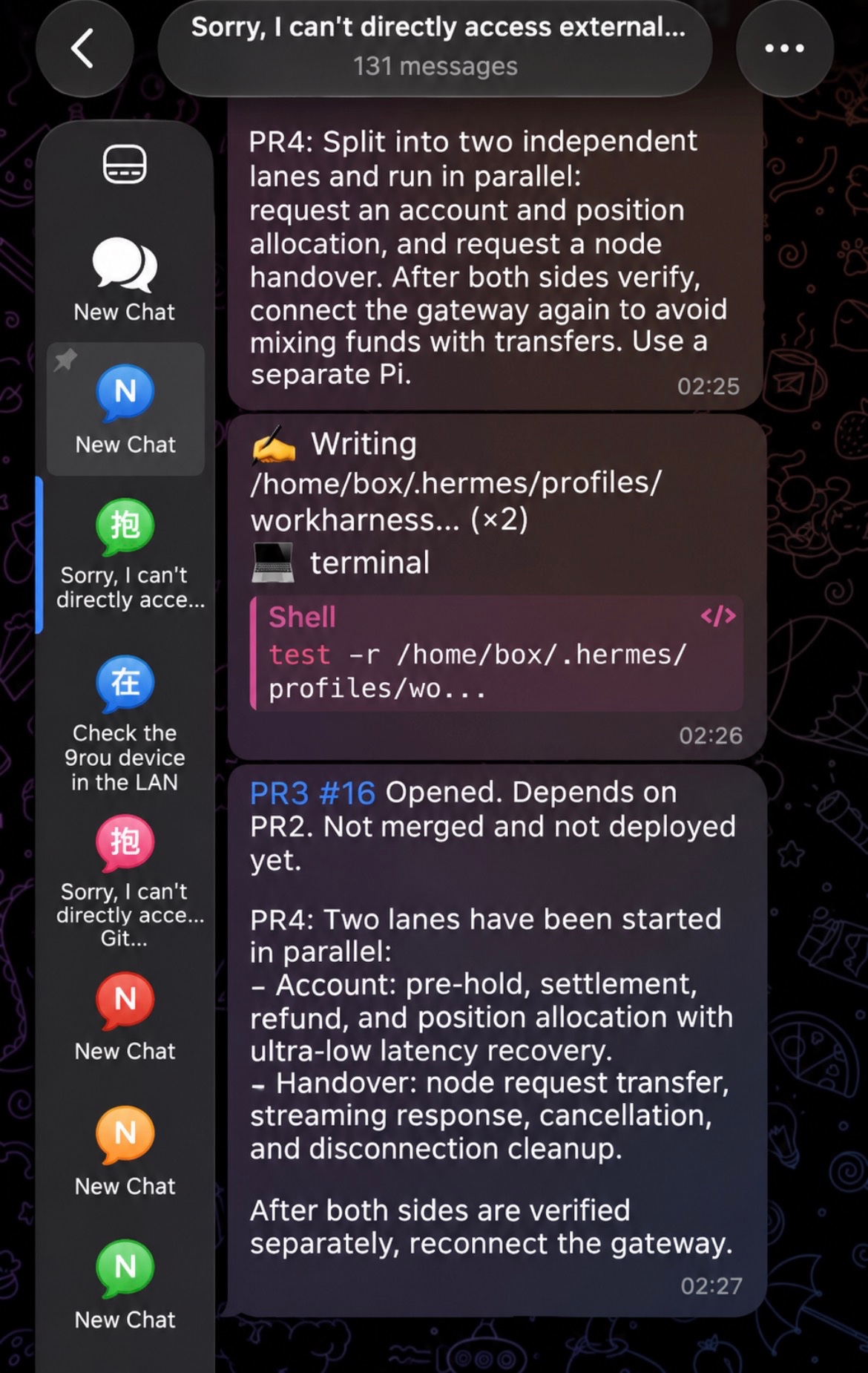
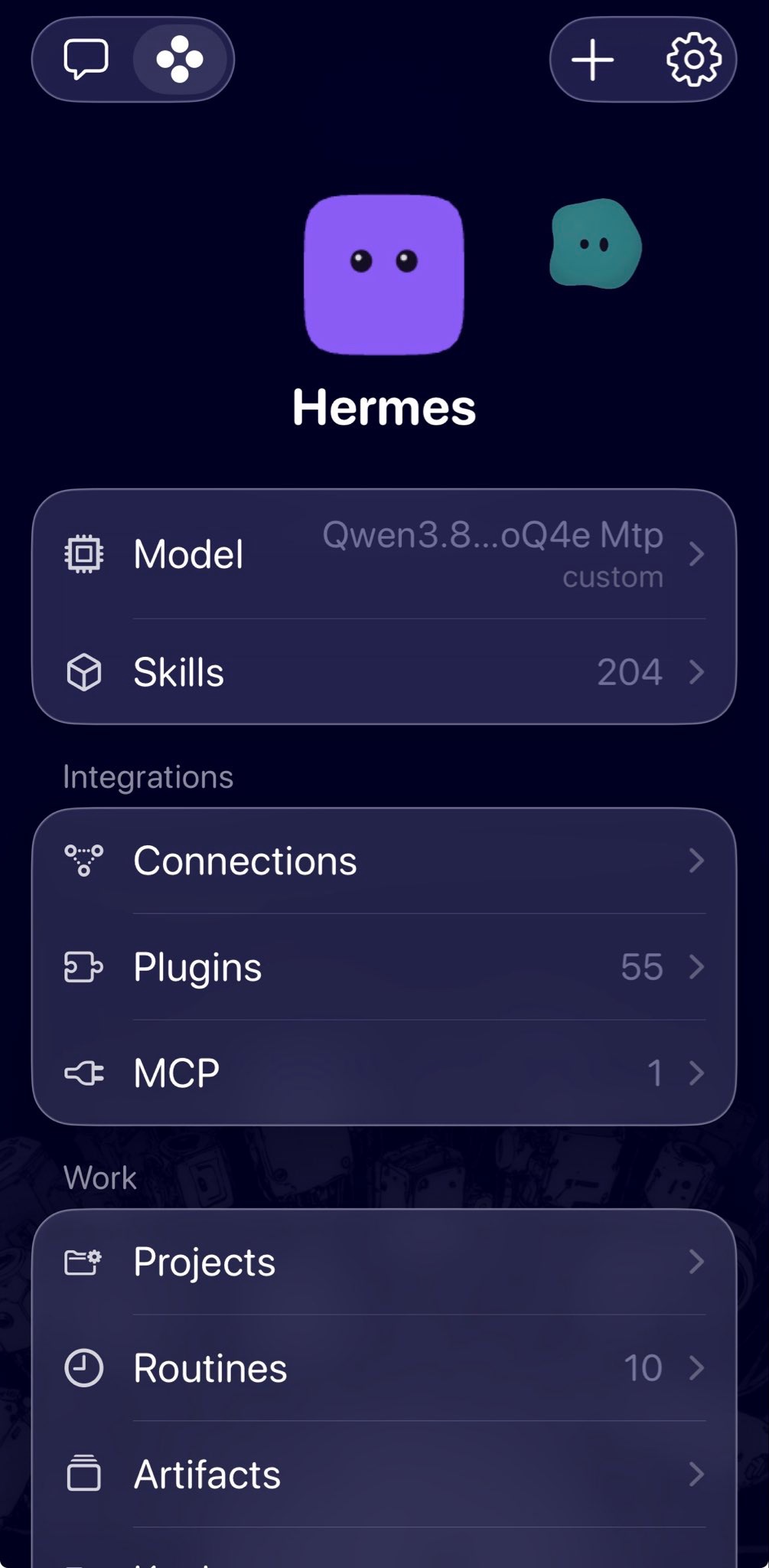
The official Hermes Agent mobile app has entered public beta on iOS and Android.
More posts
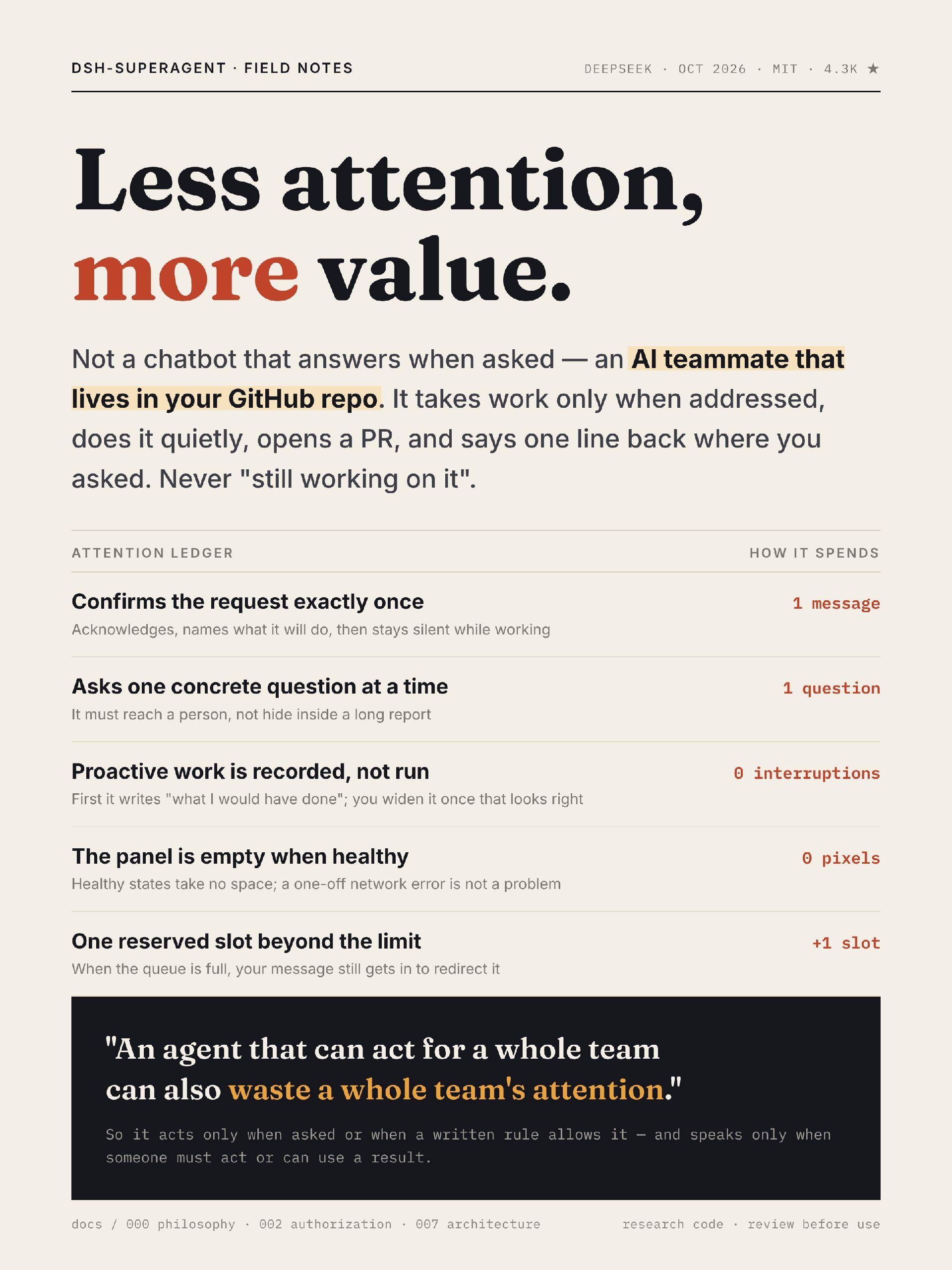
internally. It stays online, picks up work on its own, files a PR when it's done, and reports back, the way a coworker would. DeepSeek's own design goal is to take as little human attention as possible and hand back as much value as possible. The real shift is going from an agent that sends you messages to one that does the work. Three designs worth copying. Deciding whether to accept a task is split into two layers: a gatekeeper in plain code (is this person on the allowlist, did they @ me), and an advisor, which is the model reading the surrounding context. Cheap checks stay cheap, and the judgment call is the only thing that costs a model call. After the agent takes a job it posts a work badge, stating which version of the rules it is acting on, how far it is allowed to make changes, and who approved it. All of that before it touches code. Concurrency gets a hard cap, but one slot is always held open for messages from people. This is the part I like most. Even with the queue full, you can still redirect a running task or ask for a status update. Without that reserved slot, work piles up and you find out an hour later that it did the wrong thing at full speed.
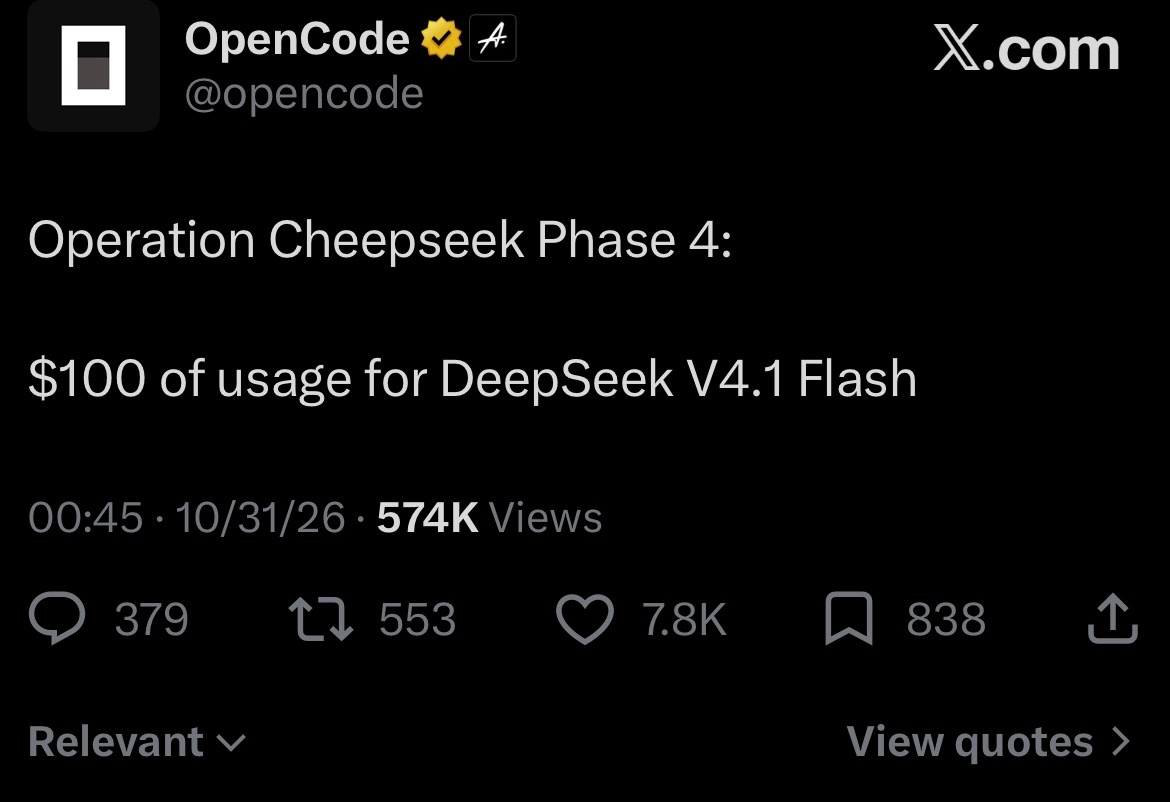
ds-v4.1-flash credits. Their $10 plans are going toe to toe. opencode barely finished announcing before commandcode matched it. Don't overthink it. These two are the best value you'll find right now, and if you just go by token cost, it's effectively a 0.1x rate.
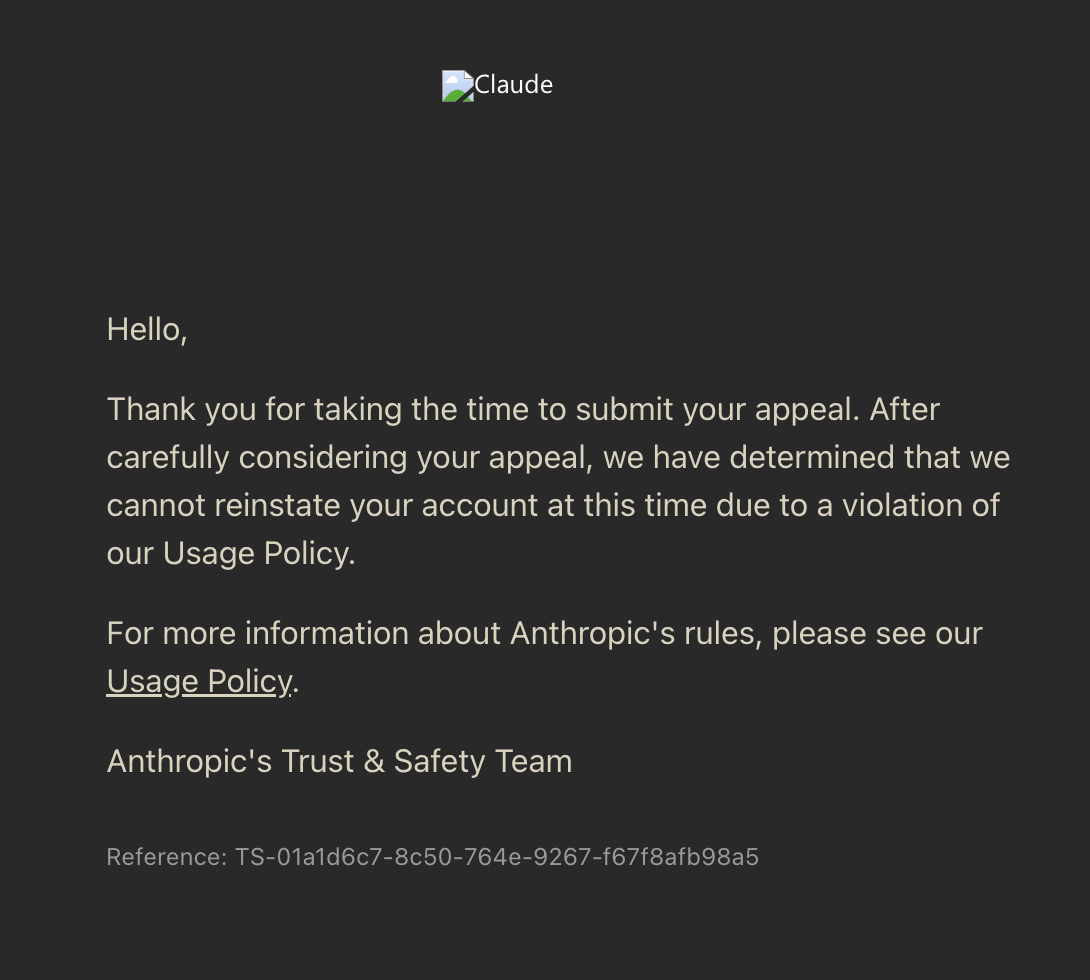
Won't refund the subscription either. I'm half convinced the appeal email is itself phishing, because I'm pretty sure they log the IP. DHH came to Shenzhen recently and showed how he uses Claude Code over there. That's the safest way now, honestly: run Claude Code on an overseas machine, connect through Tailscale, never use it locally. So I need to rent an overseas box with a residential IP, and register and log into Claude there.
Until late September it was the usual setup: parked in front of my laptop, terminal open, bossing pi around, fanning out subagents, then eyeballing diffs myself and filing the PR. Glued to the chair all day, every day. Late September I moved the whole thing to my phone, Hermes runs the show, pi takes the orders. My back is very grateful. Three weeks in, still no regrets. Stack: Hermes on flagship brains (gpt-6-astra / opus-5.5), pi on mid-tier (ds-v4.1-flash / sonnet / terra) with as few plugins as possible, the two talking over a2a. Hermes reads the issues, slices them into small tasks, spins up a worktree for each one, and dispatches a pi into it. When a pi finishes it pings Hermes, who decides: ship the PR or bounce it back for rework. I get back from a full day of being a tourist, or just wake up, and a dozen PRs are sitting there done. Pretty sweet. The catch is how black-box the whole thing is. My emotional arc has been a rerun of early vibe coding, except back then I at least read the diffs. Now even that goes to a flagship model. Boxes all the way down. If you don't have data anxiety, grok-bot and chatgpt-dot basically ship this out of the box, grok-cli and codex built in, native agent-to-agent comms. Downside: your code lives on their servers, everything's moderated, and one ban takes it all with it.