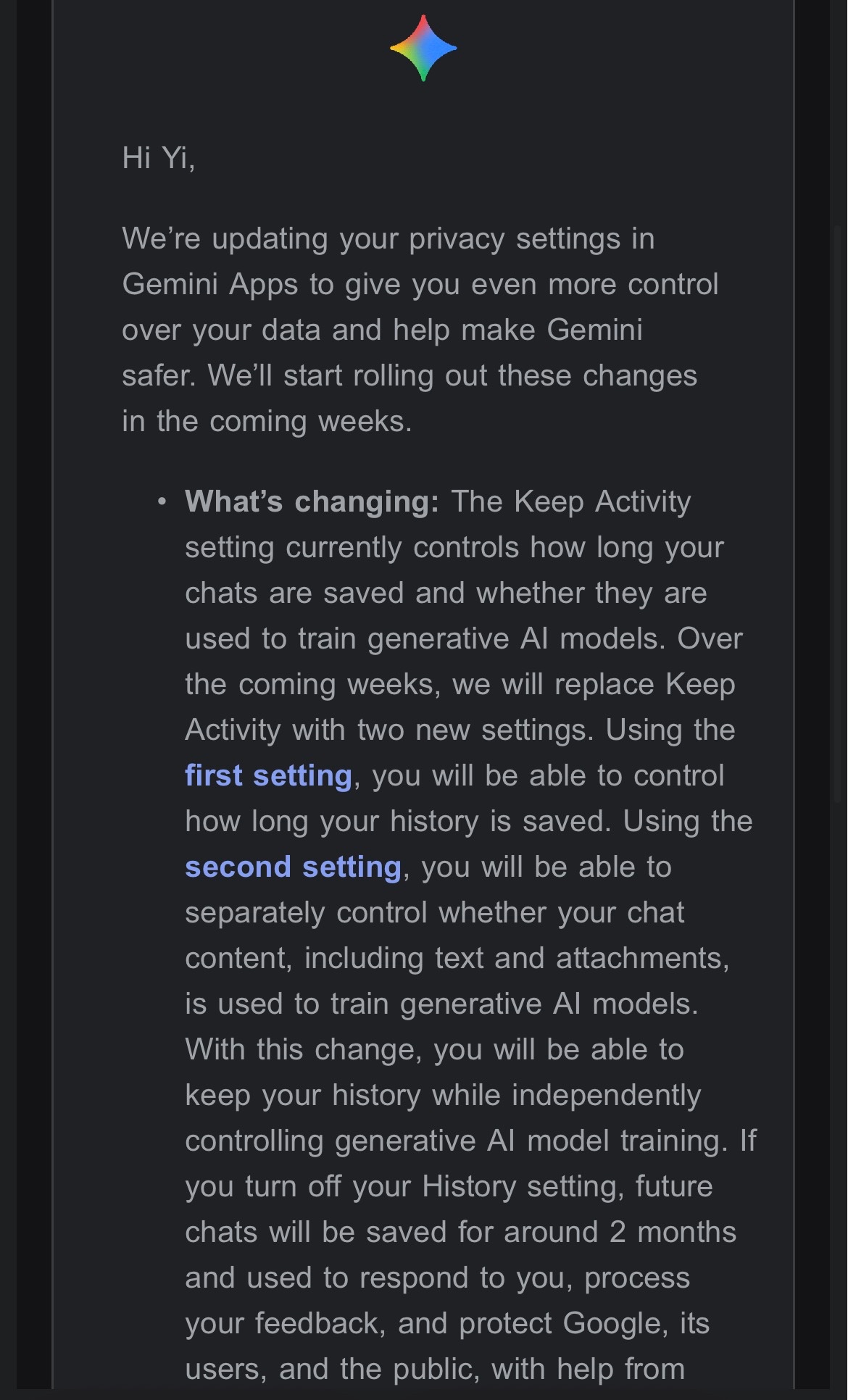
Gemini will soon let you opt your chats out of training.
The setting isn't live yet. Until then, every conversation still gets fed to Gemini by default.
The setting isn't live yet. Until then, every conversation still gets fed to Gemini by default.
More posts
. haven't opened it in months.
Made a 3D crystal ball with rain inside using it. Building model, rain animation, lightning flashes. Honestly surprised me how well each part landed. Final result looks polished, no cheap plastic vibes. $0.070 / ¥0.5 input, $0.003 / ¥0.02 cache hits, $0.281 / ¥2 output. At this price, hy-4-flash is a no-brainer for daily tasks.

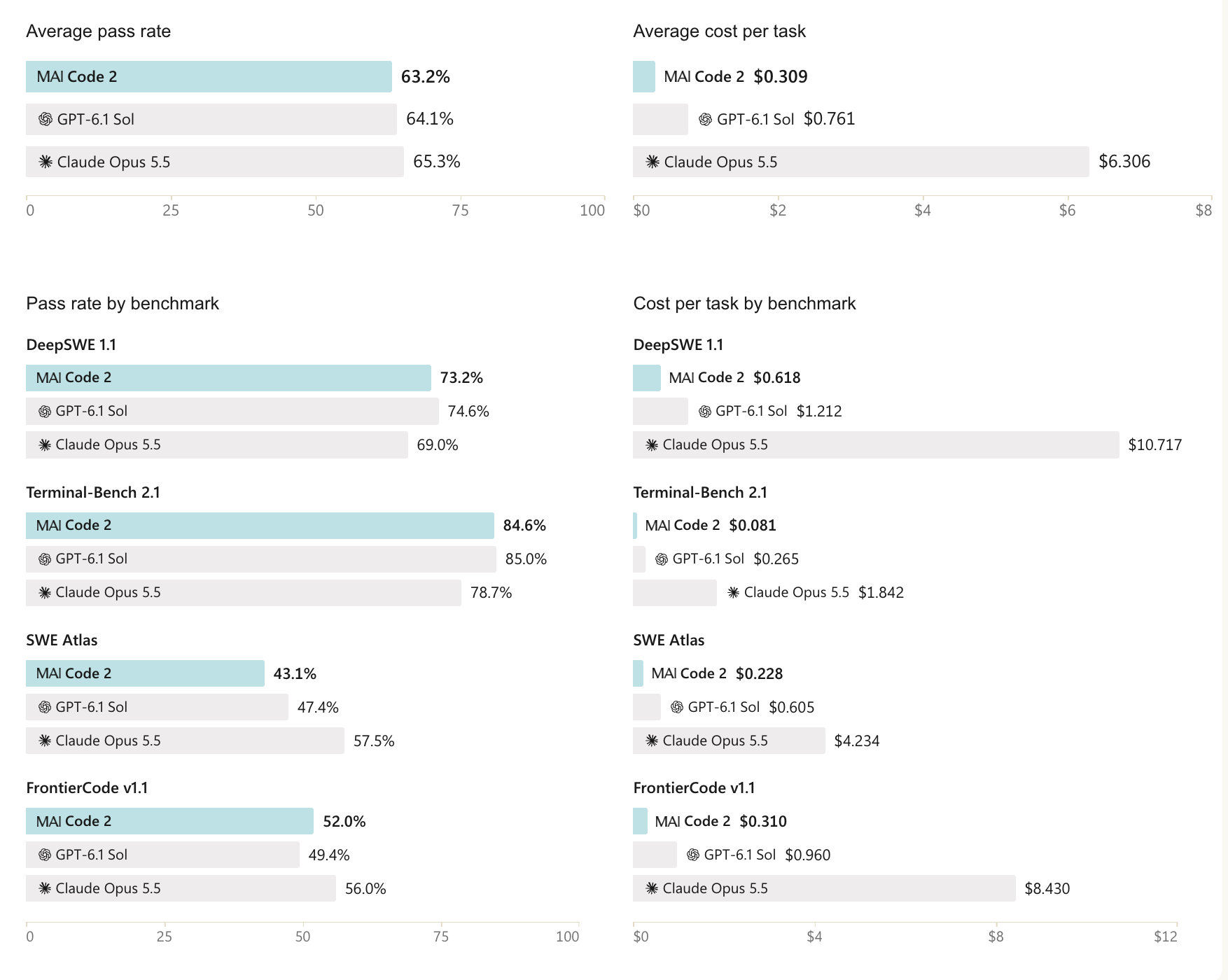
. It's chasing bang for the buck. Ignite 2026 shipped two in-house coding models: MAI Code 2 and Code 2 Flash. Code 2 is a 2.8T total parameter MoE with 77B active. Image and text in, 1M context, five levels of reasoning effort. On the four big coding benchmarks it lands at about 98% of GPT-6.1 Sol's performance for 40% of the cost, and 96% of Opus 5.5's for 5% of the cost. Flash runs 12B active, distilled from a bigger teacher model. 5x cheaper than Haiku 5.5 and still 12% better. Per million tokens: Code 2 is $0.50/$2.50, Flash $0.05/$0.25. That's the 50% off promo rate, and it doubles on May 17, 2027. Both are already in Copilot, and Flash works on the free plan.
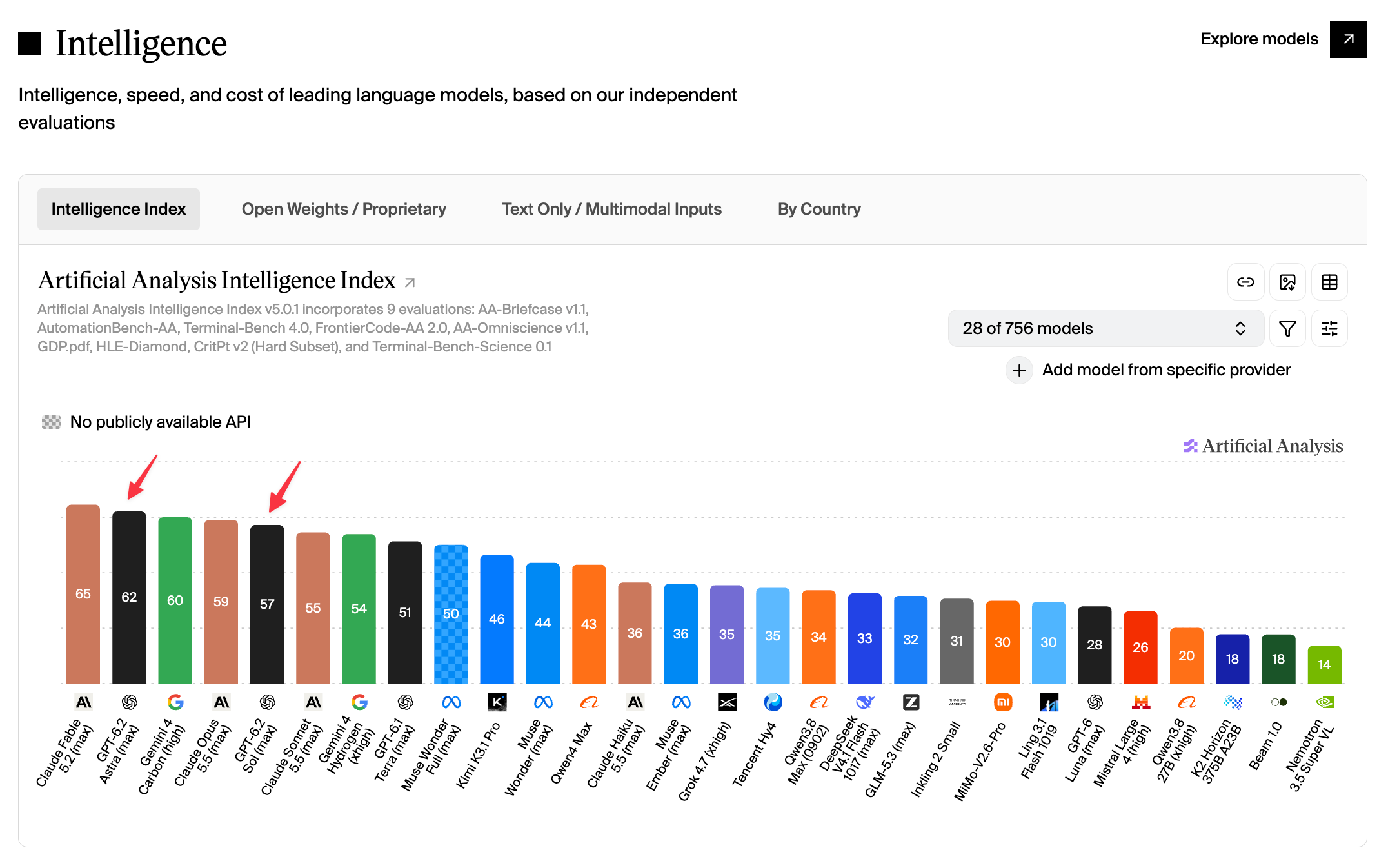
Astra is the flagship, the one built for delivery quality that OpenAI calls "the best model for scientists." Sol is the everyday workhorse. It's good at multi-step agentic flows, its writing sounds natural, and OpenAI says plenty of people internally already use it as their default. On price, Astra is $8 in, $40 out, 20% below the previous generation, with cached input at $0.40. Sol stays at $2/$10. On the Artificial Analysis intelligence index, Astra and Sol score 62 and 57, ahead of Claude Opus 5.5 and Sonnet 5.5 respectively. A task on Sol runs $1.01, the best value of any model right now.