Don't post Grok content on Meta platforms
More posts
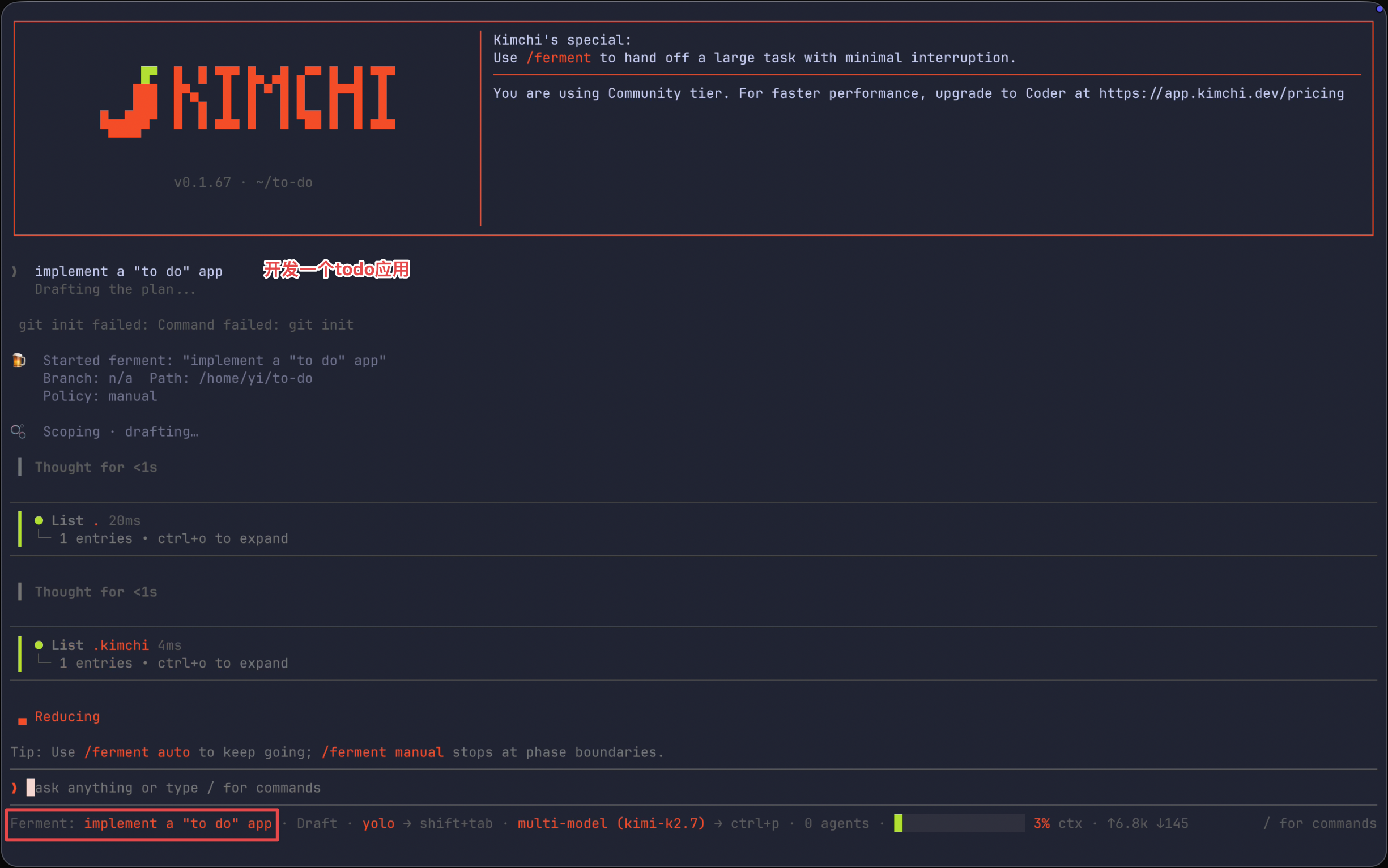
There's another open source coding agent called Kimchi.
It's built on Pi, has a /ferment mode that auto-routes tasks to different models (very similar to how I run Pii). Coding → MiniMax M3 (cheap, solid) Planning → Kimi K2.7 (strong reasoning) Codebase search → Deepseek-V4-flash (fast, dirt cheap) Multiple subagents spin up and rotate. Kimchi says 40-60% cheaper than running a single model. Free tier has a weekly quota, and like Pi you can plug in your own API keys. I tried /ferment: one sentence to build a todo app. It split the task, executed, self-reviewed, opened a PR. The output was genuinely solid.

Get comfortable with agents.
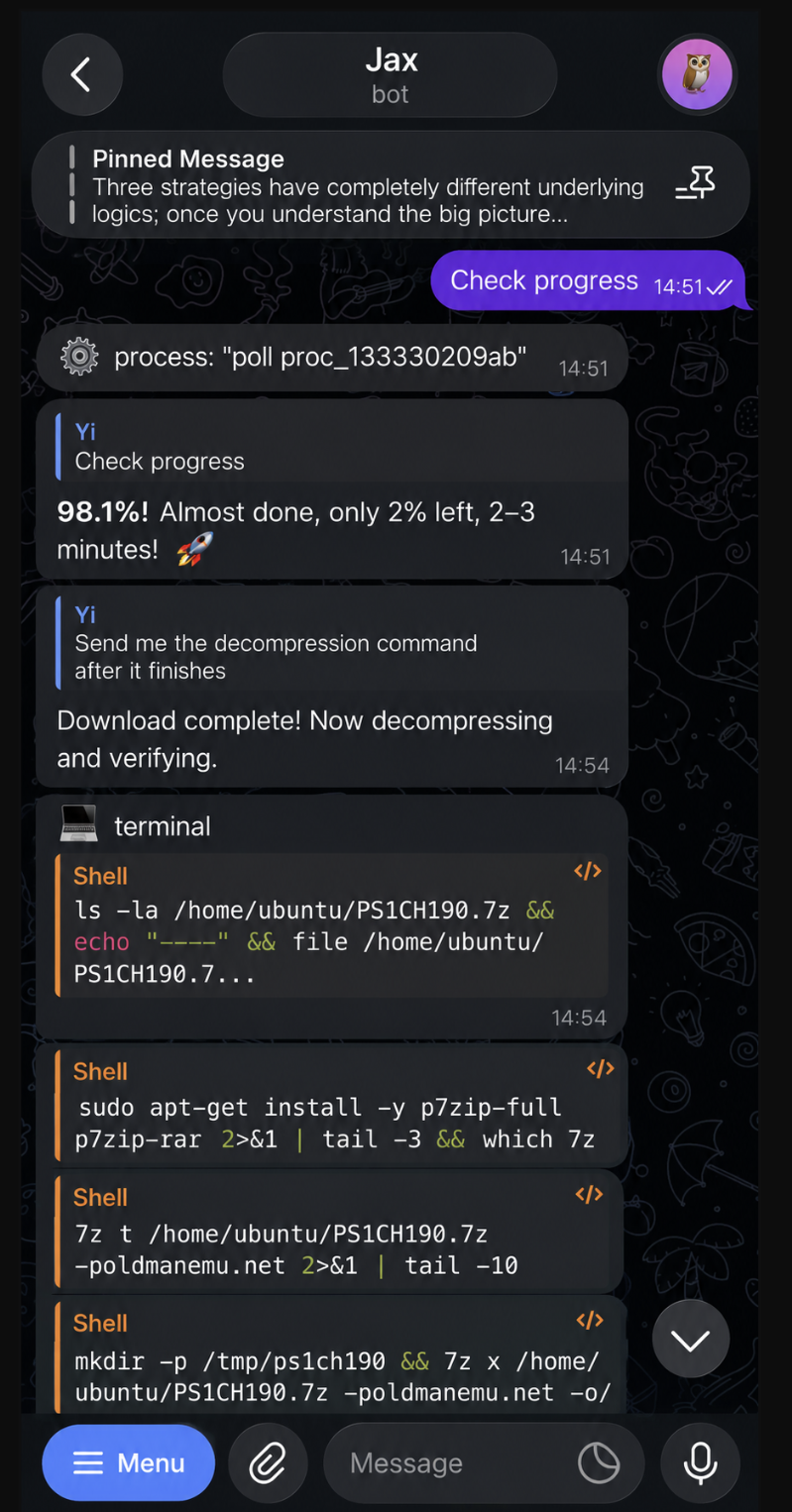
The old way of doing things doesn't really apply in 2026. Agents are basically an operating system that understands plain language now. Just try handing stuff to them. Today I needed a file only available on some throttled Chinese cloud drive. Local download was painfully slow. I was heading out so I couldn't keep my laptop awake, and I didn't feel like hunting down a mirror on my NAS. From my phone I pasted the link to the agent on my server. It went through. It cleared the CAPTCHA. Clicked download. Handled errors. Saved the file. File turned out to be huge, so it found a temp sharing service, uploaded it, and sent me a fast link. Didn't ask me. Just did it. I moved my agent to a 1 vCPU / 1 GB RAM box a while back. That might've been a mistake. Models are only getting smarter. Agents will get more capable with them. Skimping on hardware just bottlenecks what they can do.

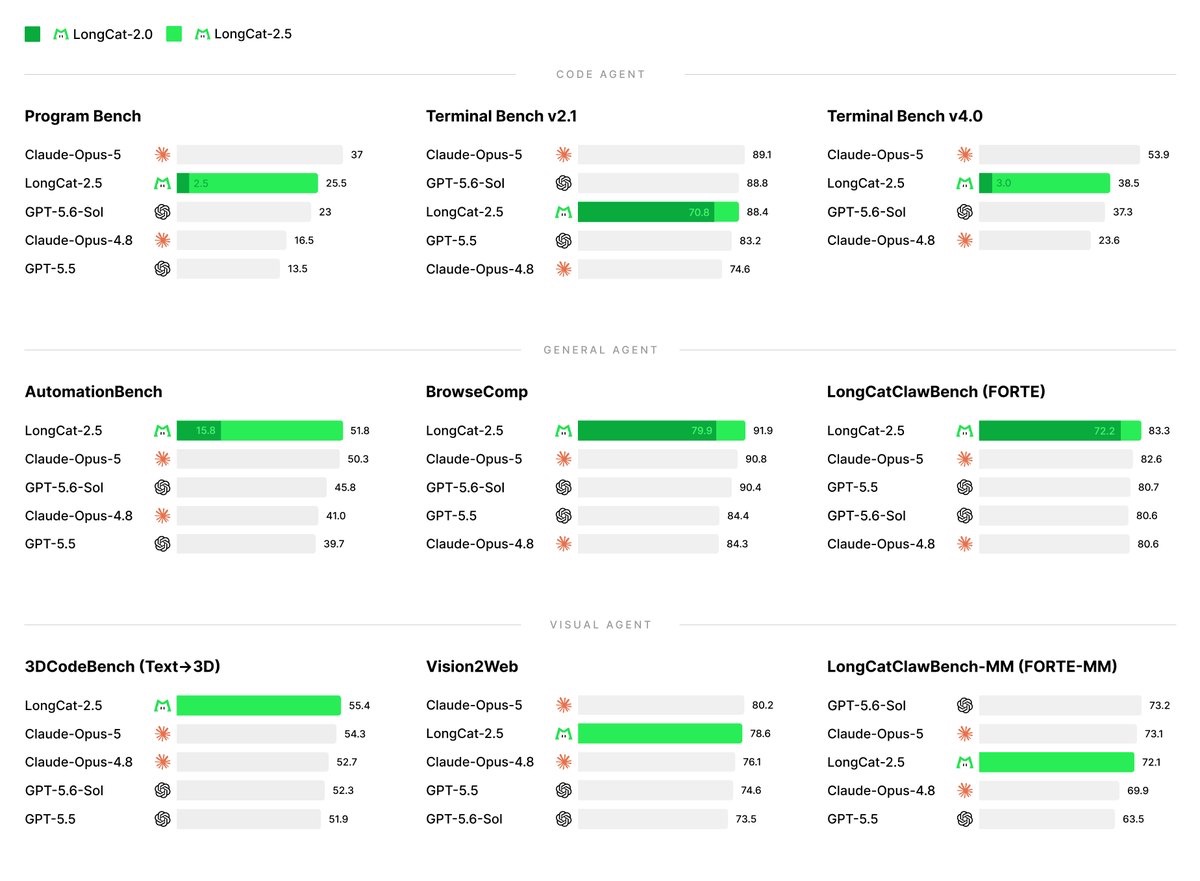
Meituan shipped LongCat-2.5
. 1.6T params, ~48B active, native multimodal, aimed at long-horizon agents, trained start to finish on Chinese hardware. Images get quantized into multi-level discrete tokens, and that's where Visual Coding and 3D pick up. On the RL side, failed trajectories get turned back into verifiable training tasks. W4A4 inference, 43% faster prefill. Meituan's own evals put it between Claude Opus 4.8 and Opus 5.

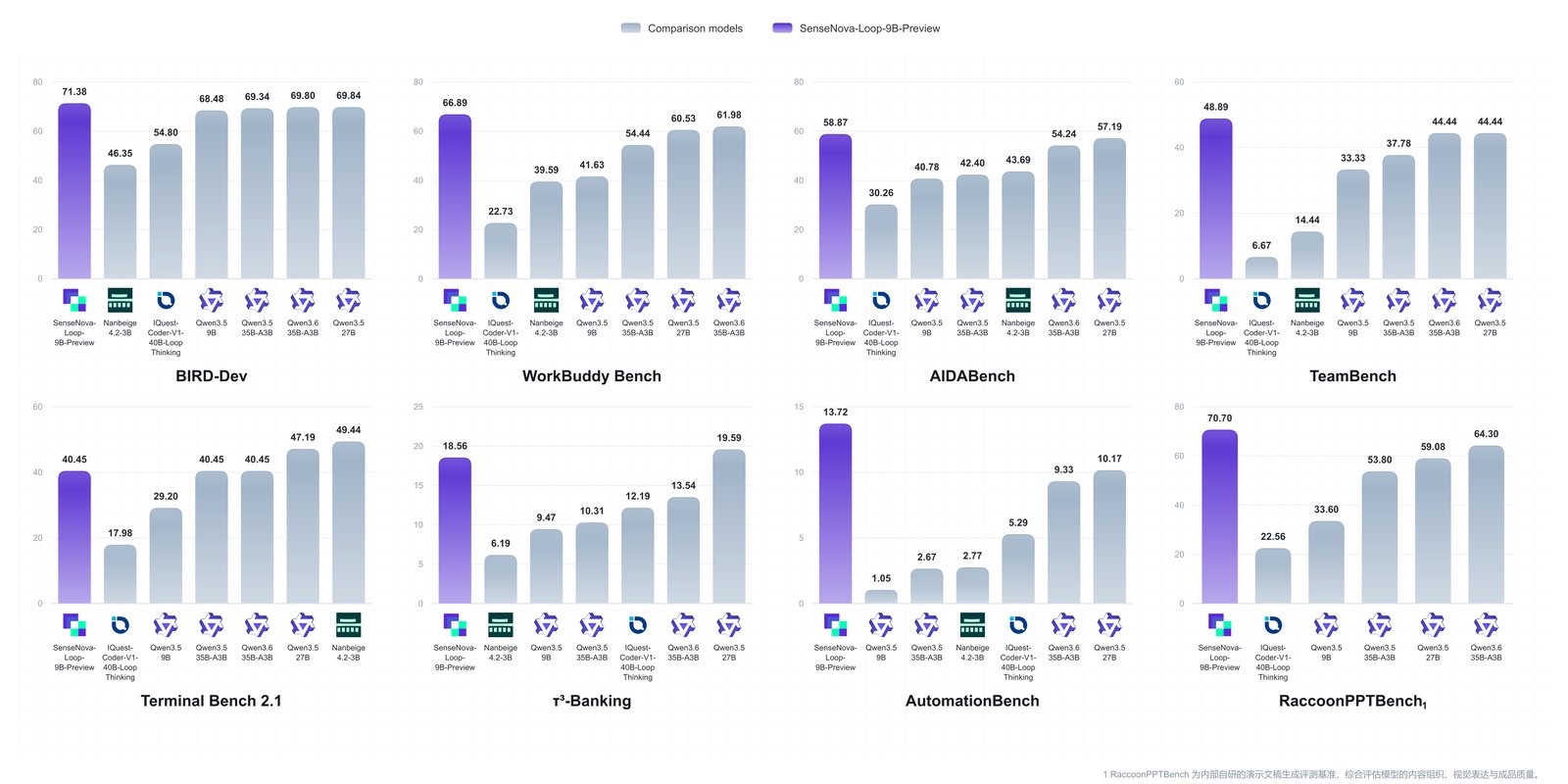
SenseTime open-sourced SenseNova Loop-9B-Preview.
It stacks layers instead of parameters. The decoder has 32 layers, but layers 4 through 27 run twice with shared weights, so a forward pass does 56 layers of work while the checkpoint stays at 9B. Their own eval numbers: 71.38 on BIRD-Dev and 13.72 on AutomationBench, both above Qwen3.5-27B. Terminal Bench is still behind.