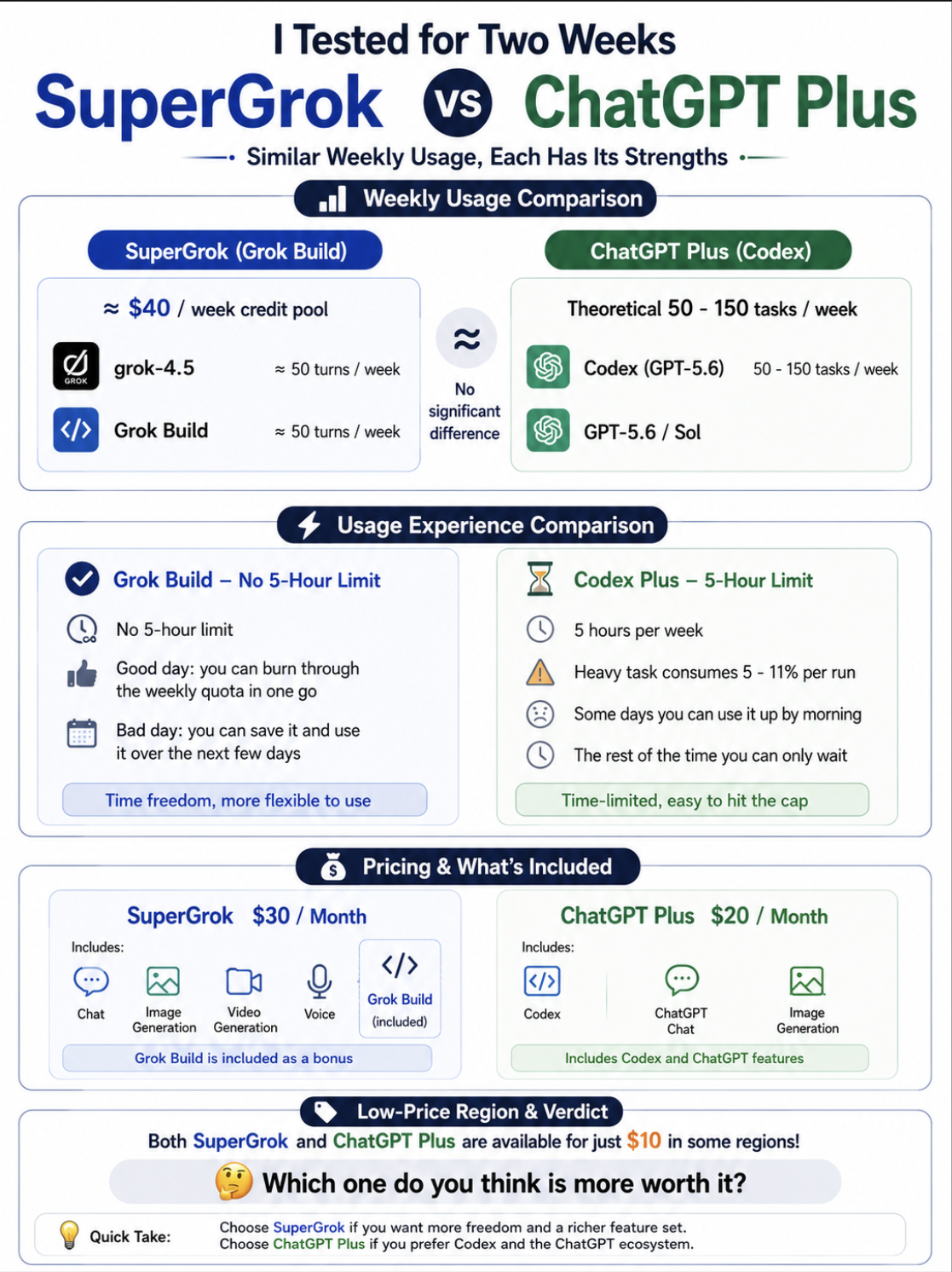
Two weeks with SuperGrok and ChatGPT Plus
More posts
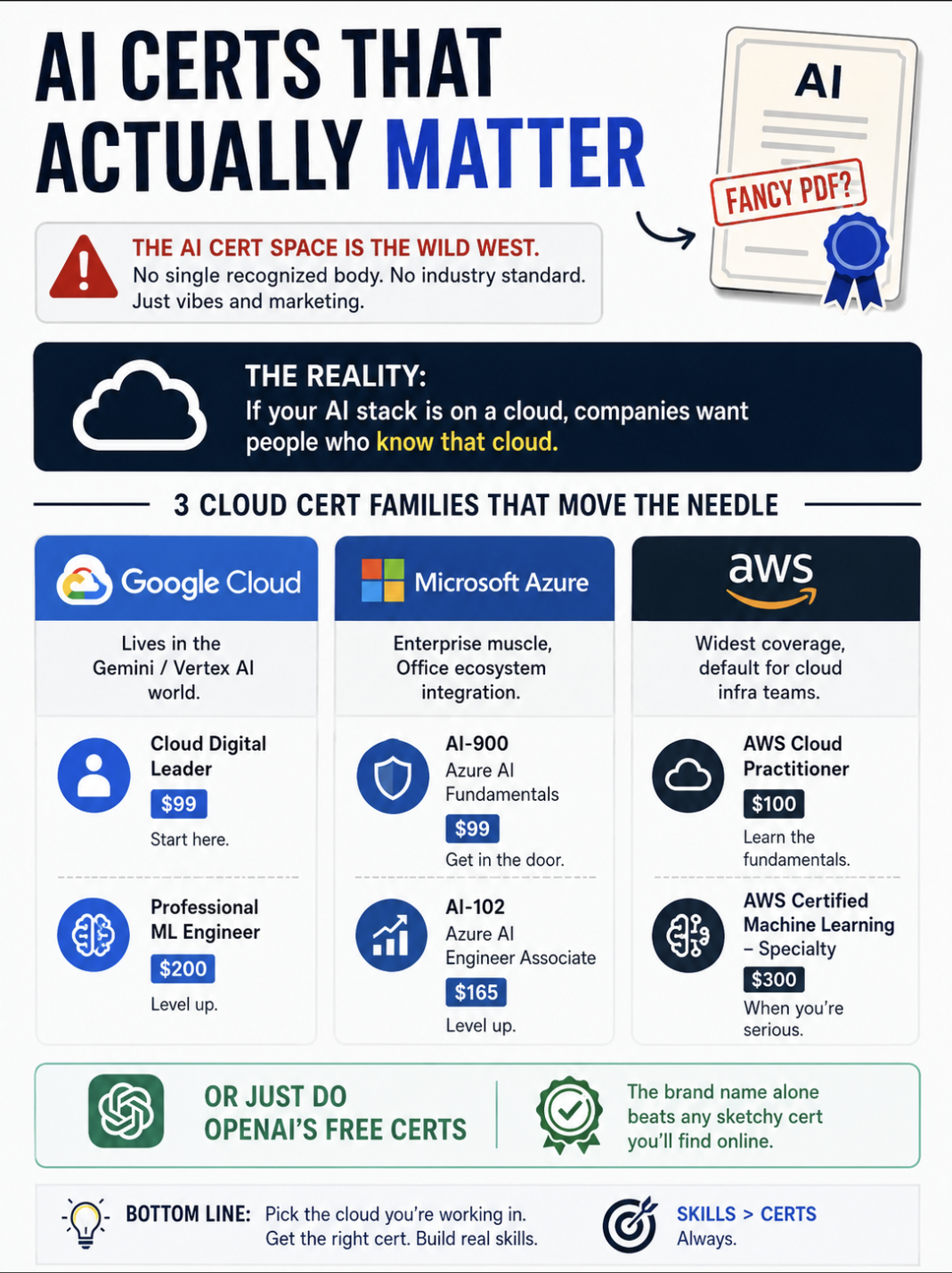
My friend just dropped real money on AI certs that are basically
fancy PDFs. The AI cert space is the wild west. No single recognized body, no industry standard. Just vibes and marketing. Here's the reality most companies operate on: if your AI stack is on a cloud, they want people who know that cloud. Three cert families actually move the needle. Google Cloud ($99 to $200): Cloud Digital Leader first, Professional ML Engineer after. Lives in the Gemini / Vertex AI world. Azure ($99 to $165): AI-900 gets you in, AI-102 levels you up. Enterprise muscle, Office ecosystem integration. AWS ($100 to $300): Practitioner for fundamentals, ML Specialty when you're serious. Widest coverage, default for cloud infra teams. Or just do OpenAI's free certs. The brand name alone beats any sketchy cert you'll find online.

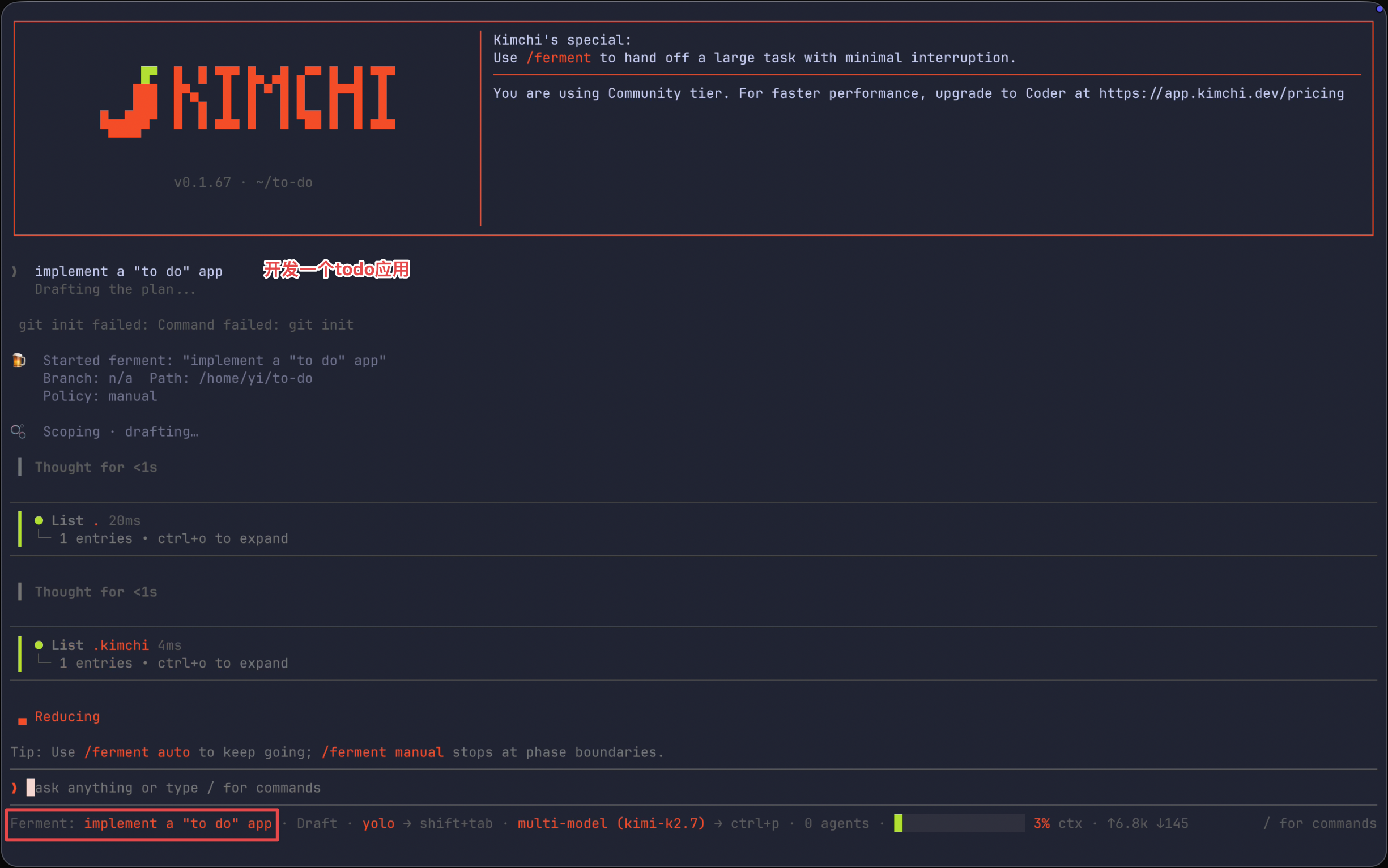
There's another open source coding agent called Kimchi.
It's built on Pi, has a /ferment mode that auto-routes tasks to different models (very similar to how I run Pii). Coding → MiniMax M3 (cheap, solid) Planning → Kimi K2.7 (strong reasoning) Codebase search → Deepseek-V4-flash (fast, dirt cheap) Multiple subagents spin up and rotate. Kimchi says 40-60% cheaper than running a single model. Free tier has a weekly quota, and like Pi you can plug in your own API keys. I tried /ferment: one sentence to build a todo app. It split the task, executed, self-reviewed, opened a PR. The output was genuinely solid.

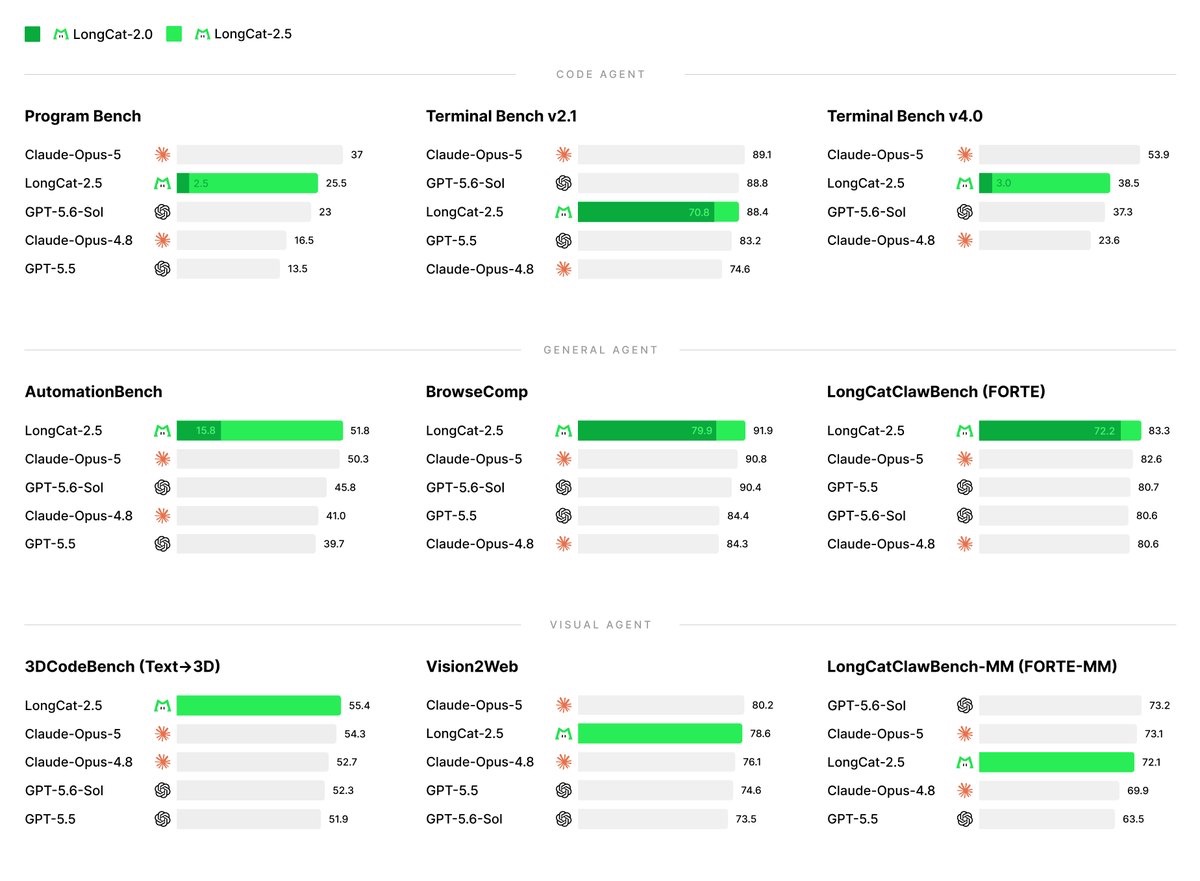
Meituan shipped LongCat-2.5
. 1.6T params, ~48B active, native multimodal, aimed at long-horizon agents, trained start to finish on Chinese hardware. Images get quantized into multi-level discrete tokens, and that's where Visual Coding and 3D pick up. On the RL side, failed trajectories get turned back into verifiable training tasks. W4A4 inference, 43% faster prefill. Meituan's own evals put it between Claude Opus 4.8 and Opus 5.

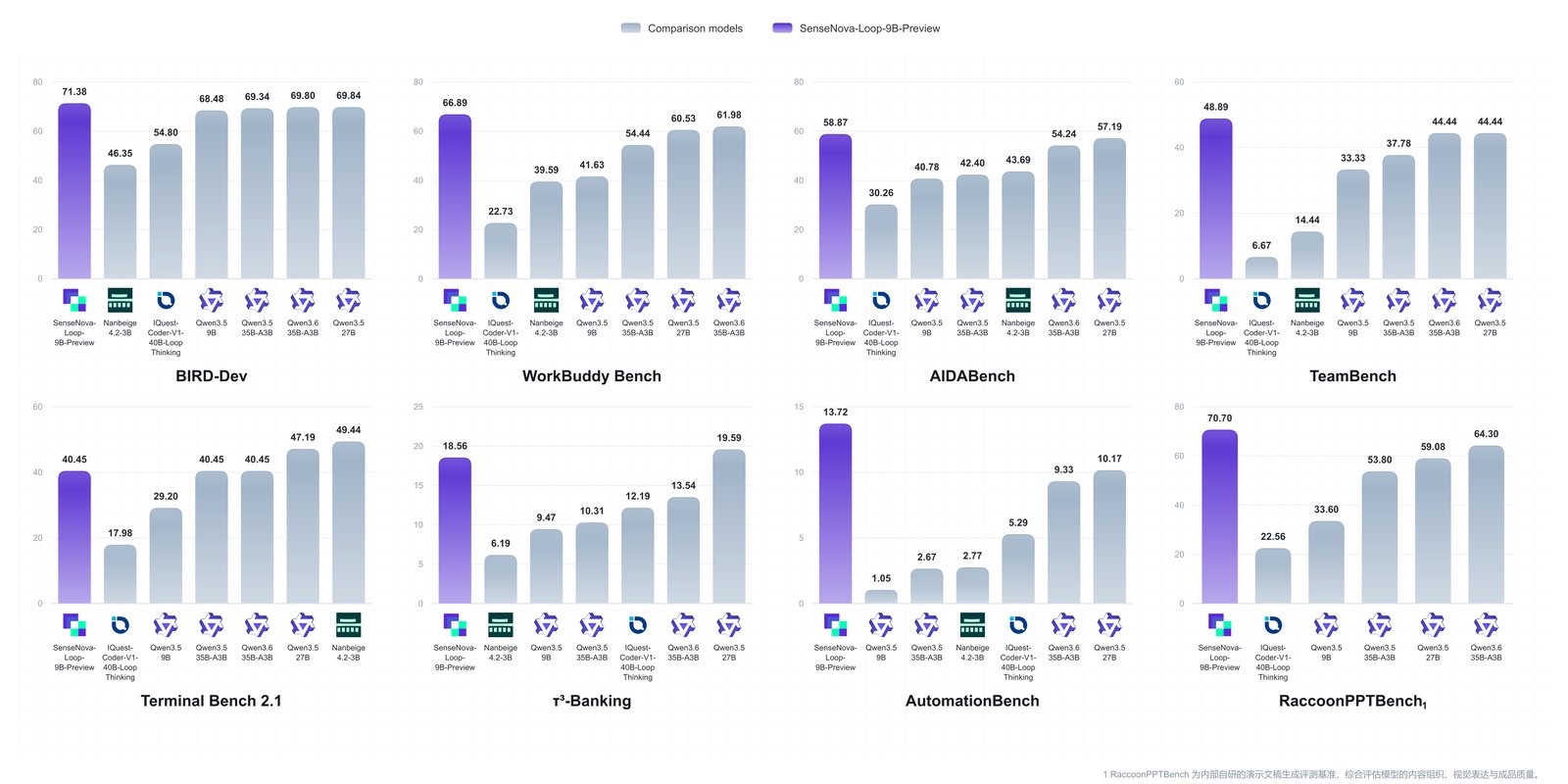
SenseTime open-sourced SenseNova Loop-9B-Preview.
It stacks layers instead of parameters. The decoder has 32 layers, but layers 4 through 27 run twice with shared weights, so a forward pass does 56 layers of work while the checkpoint stays at 9B. Their own eval numbers: 71.38 on BIRD-Dev and 13.72 on AutomationBench, both above Qwen3.5-27B. Terminal Bench is still behind.