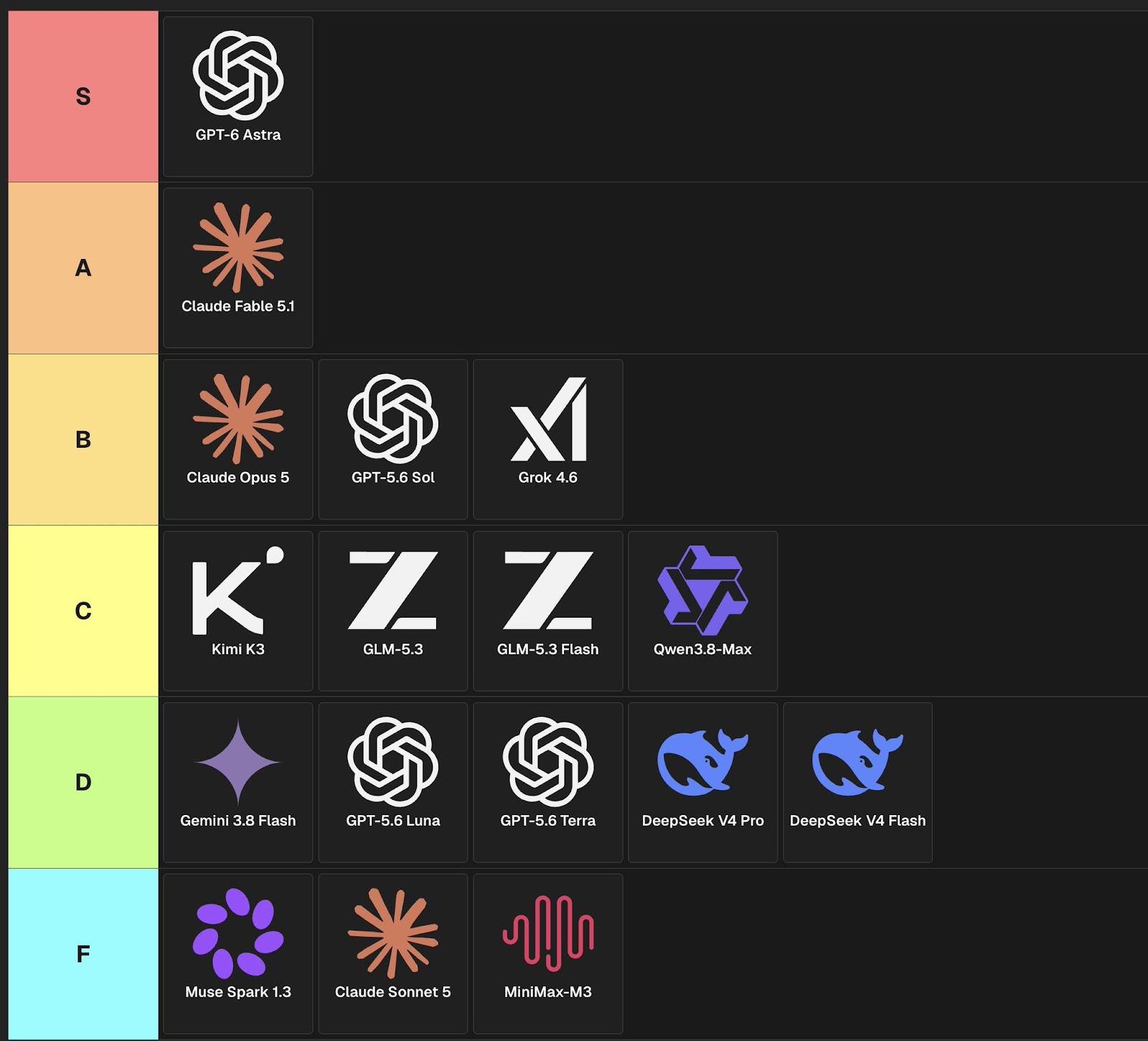
reasonable
More posts
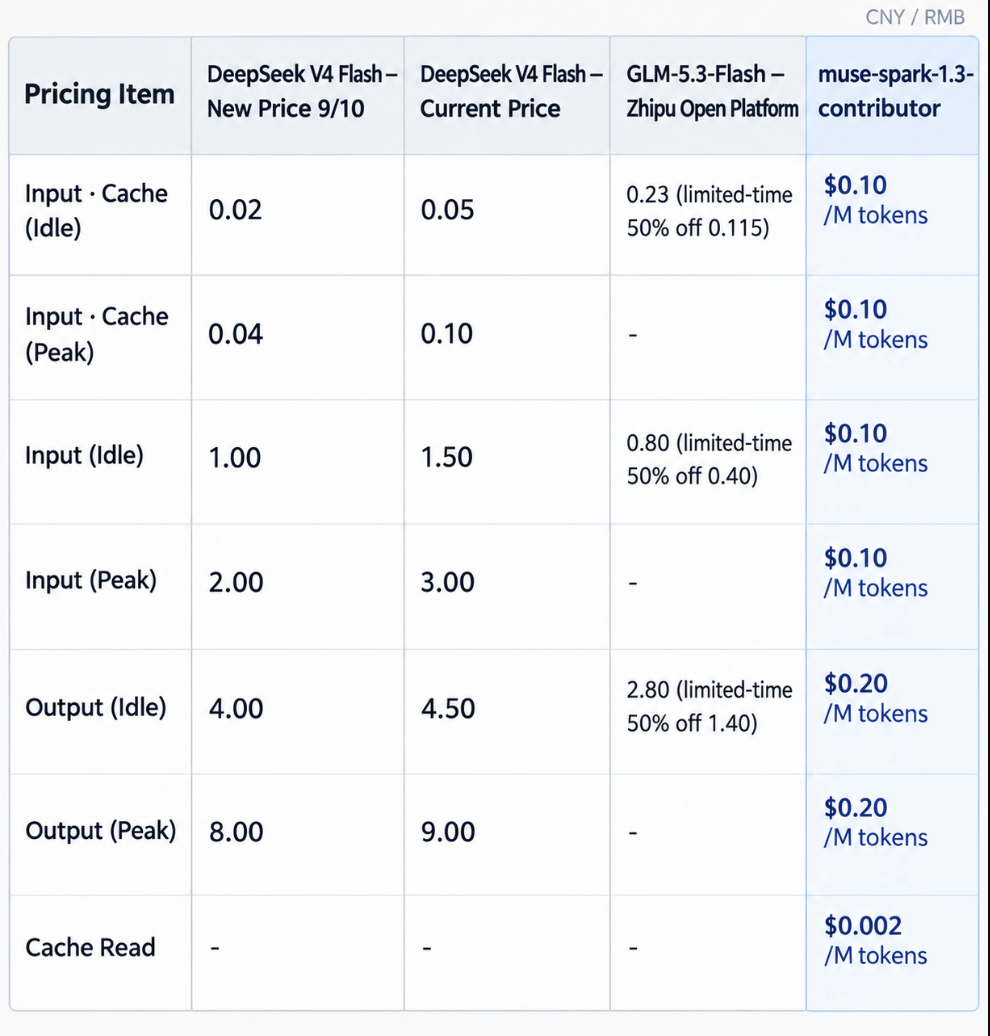
Starting 12:00 noon Beijing time, September 10 — Flash series repriced: - Cache hit: ¥0.02/M tokens (back to historical low) - Input, no cache: ¥1 (July 16 pricing) - Output: ¥4 (still double the pre-hike number) Two months of whiplash: April slasher to ¥0.02 (industry floor), then August 16 peak/off-peak surge of 150%-400%, now September 10 pulling back. Price cuts are a race to the bottom — Zhipu GLM 5.3 Flash went half-price to poach users, Meta Muse Spark 1.3 pressuring from the other side.
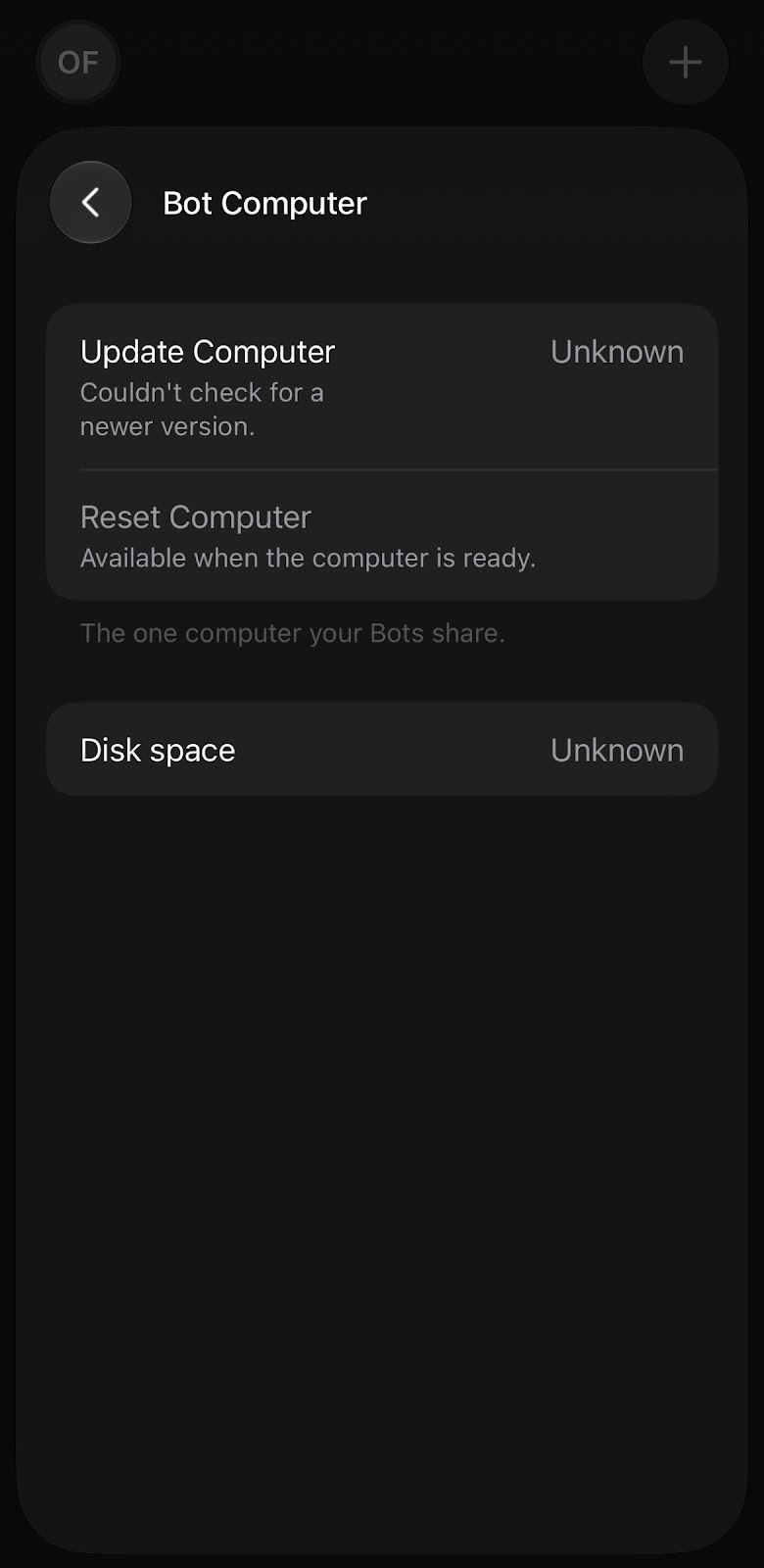
, but you still don’t throw it away.It’s an 8-core / 16+128G machine, except it isn’t a real Linux server. It’s just a Docker container. No systemd, no daemons, no auto-restart, no boot-on-start, no public IP. Every so often a grok-bot update spins up a new instance. Stuff in home survives the update. Running processes don’t. You have to get the bot to bring them back up. So if you actually want to use the machine, grok-bot has to keep it alive. My setup: install Hermes, write a watchdog that relaunches Hermes every minute, then tell grok-bot to kick the watchdog every five minutes. New instance lands → grok-bot starts the script → script starts Hermes → Hermes starts everything else. It’s holding for now. Two problems though. One: grok-bot only pokes it every five minutes. Weekly quota hit 60% in two days. Quota just reset today, otherwise the base plan isn’t enough. Two: the box is flaky. Anything a bit heavy and it dies. Grok-bot goes silent too. Only fix is restore the machine in settings.
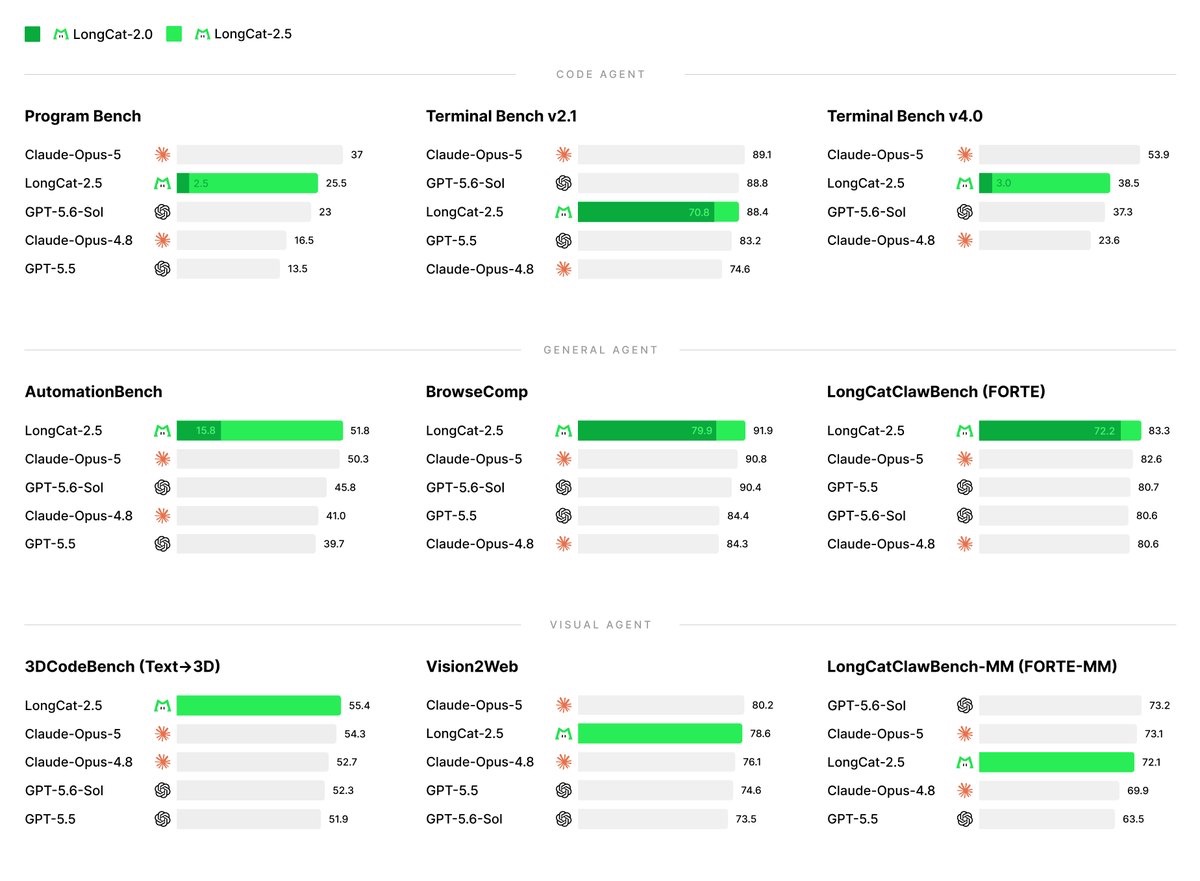
. 1.6T params, ~48B active, native multimodal, aimed at long-horizon agents, trained start to finish on Chinese hardware. Images get quantized into multi-level discrete tokens, and that's where Visual Coding and 3D pick up. On the RL side, failed trajectories get turned back into verifiable training tasks. W4A4 inference, 43% faster prefill. Meituan's own evals put it between Claude Opus 4.8 and Opus 5.
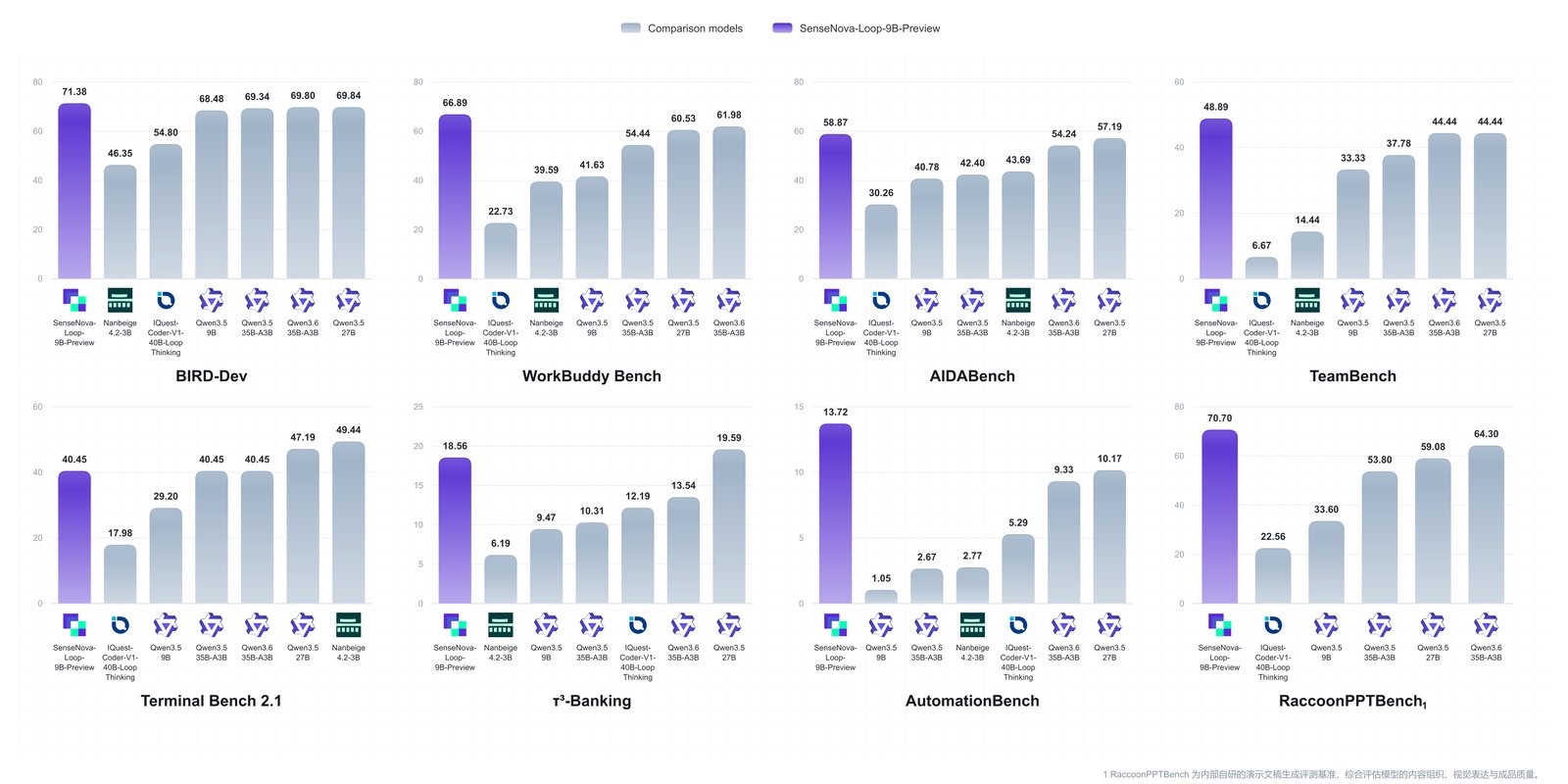
It stacks layers instead of parameters. The decoder has 32 layers, but layers 4 through 27 run twice with shared weights, so a forward pass does 56 layers of work while the checkpoint stays at 9B. Their own eval numbers: 71.38 on BIRD-Dev and 13.72 on AutomationBench, both above Qwen3.5-27B. Terminal Bench is still behind.